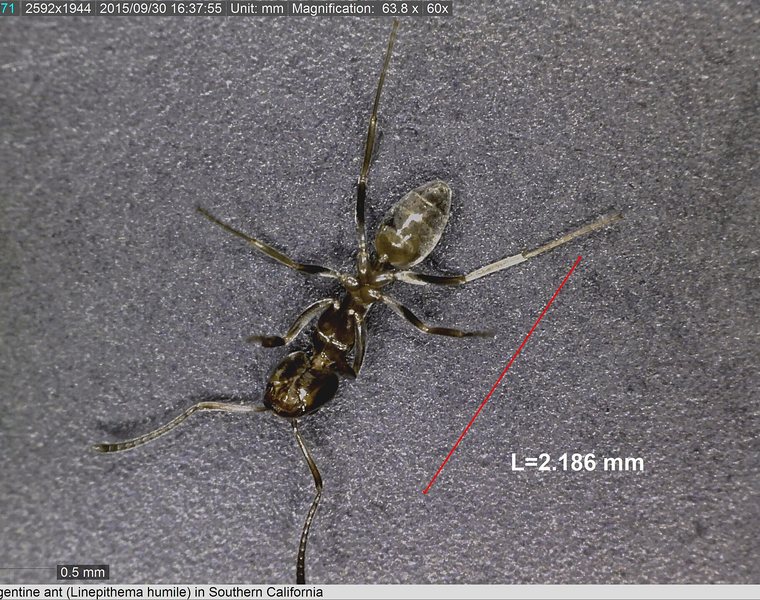
Ant control in Danville, CA is, more than anything, an Argentine ant problem. These tiny ants form massive interconnected supercolonies across the East Bay, and around the San Ramon Valley's oak-studded hillsides and landscaped yards they trail indoors on a seasonal rhythm, in during the hot, dry months hunting water, and back in again when the first winter rains flood their outdoor nests. They stream along counters, baseboards, and windowsills toward kitchens and baths. Because the trail you see is a fraction of a colony that can span whole hillsides, spraying it just splits the colony and makes it worse. An experienced local exterminator uses baits and non-repellent products the workers carry back to the nest.
Why the valley gets so many ants
Argentine ants nest outdoors under mulch, stone, pavers, potted plants, irrigation lines, and along the oak roots and retaining walls common to Danville, Alamo, and the hillside neighborhoods. As summer dries the hills, they follow moisture indoors; as winter rain saturates their nests, they move indoors again for shelter. Both swings send trails into valley homes.
The nest is outdoors, often up the slope from the house, so lasting control has to work the exterior nests and entry points, not just the counter you wiped down this morning.
How ant treatment works
The fix is colony-level and bait-led. The exterminator places slow-acting bait along the trails so foragers carry it back and share it through the colony, then treats the exterior perimeter with a non-repellent product that ants cross without detecting, spreading it nest to nest. Repellent sprays are avoided because they scatter Argentine ants into new satellite nests.
Trimming plants and oak limbs off the house, fixing irrigation and plumbing leaks, and sealing entry points around windows, slab edges, and utility lines keep the next seasonal wave from finding a way in.